
· by Michael Blair, Nashville's Shutters and Blinds
The National Weather Service’s Nashville climate normals put the average high at about 91 degrees in July and 90 in August, and ENERGY STAR’s window guidance says that in a warm climate you don’t want extra heat from the sun through glass facing south, east and west. How much of that heat a window treatment stops varies widely. In Berkeley Lab’s modeling of window attachments, the best version of a cellular or roller shade saved several times as much energy over a year as the cheapest version of the same type.
Is exterior or interior shading better?
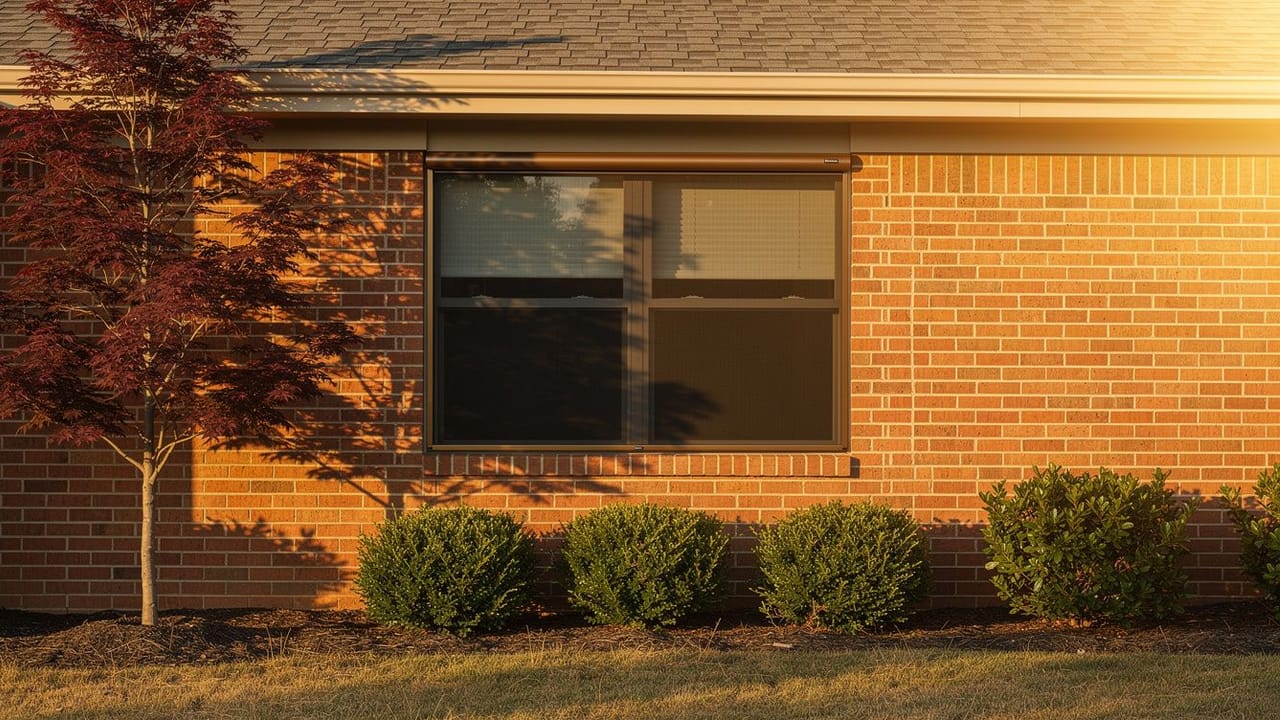
Berkeley Lab’s guide to affordable window shading lists exterior-mounted options first, as the ones that give the highest protection from solar heat, and in most houses exterior shading does the most. A screen or awning outside the window catches the sun before it reaches the glass, which is why we ask which way a window faces before we talk about product.
It doesn’t always win, though. In the lab’s model of a house in Washington, DC, the closest of its three test cities to our climate, a top-quality cellular shade saved slightly more energy over a year than a fixed awning. An exterior solar screen came out ahead of the cellular, roller and horizontal products at every lower quality level. Fixed awnings cut cooling energy substantially but raise heating energy, the lab found, so one that retracts or comes down for winter does better.
What works inside
Cellular shades are among the better interior performers. In the Berkeley Lab results they used the least energy of the shades in the heating-heavy Minneapolis house, and in the Washington house the best cellular shade tied the best roller shade. Our shades page covers the cellular, roller and woven styles we fit. One caution from the lab’s shading guide: whatever goes inside should not create an air-tight pocket between the glass and the room.
The face toward the window matters too. The lab found louvered blinds save some cooling energy when the material is more reflective, and its guide asks for interior pieces that are light-colored or mirror-like, so a white or reflective backing on a shade earns its keep on sunny glass.
- Exterior shading usually gives the most protection from solar heat
- Cellular shades are among the better interior performers
- Avoid sealing an air-tight pocket against the glass
- A light or reflective face toward the window helps
- Solar-control film can help on west glass; results vary by product and climate
Why do west-facing rooms overheat?
ENERGY STAR notes that west windows get hit by summer sun at the warmest part of the day, and that rooms behind them overheat when the sun dips below the roof overhangs in the late afternoon. An overhang helps little on a west wall in a Nashville August.
Shading that hangs in front of the glass is what addresses it: an exterior solar screen, or a deciduous tree, which ENERGY STAR points out shades the window in summer and lets the sun’s heat through in winter once the leaves are down. Film is another option. In Berkeley Lab’s Washington house, applied films saved energy at every quality level, but the results were mixed or negative in Minneapolis and Phoenix, so the product and the window decide it.
Consistency matters
A treatment only works when it is closed. Berkeley Lab weighted its results by a survey of how 2,100 households actually set their coverings in the morning, afternoon and night, and concluded that how an operable attachment is used can have a large effect on its energy performance. For a west-facing room, that means the shading stays closed through the afternoon whether anyone is in there or not.
If nobody is home at three o’clock to pull it down, a motorized shade on a schedule does it every afternoon. Winter turns the routine around, and our post on coverings that hold heat in winter covers that side. To have us look at which of your windows are doing the damage, book a free estimate.
Sources
- Lawrence Berkeley National Laboratory, Residential Windows & Attachments — Curcija et al. 2013 modeling: savings by attachment type and quality for Washington DC, Minneapolis and Phoenix; cellular shades lowest energy in Minneapolis; awnings cut cooling and raise heating; reflective louvered blinds; occupant use has a large effect; all attachments save energy in cooling-dominated climates
- Berkeley Lab, DIY Affordable Window Shading — Exterior-mounted solutions give the highest protection from solar heat; interior items light-colored or mirror-like; avoid an air-tight pocket between glass and room
- ENERGY STAR, Residential Windows, Doors, and Skylights — Low SHGC or shading for south, east and west glass in warm climates; west rooms overheat when the sun dips below overhangs; deciduous trees shade in summer and admit winter sun
- National Weather Service Nashville, Nashville climate — Normal highs of 90.9 F in July and 90.4 F in August
FAQ
Window Treatments That Cut Nashville Heat — questions
Do blinds actually reduce cooling costs?
Yes, to a degree. Lawrence Berkeley National Laboratory found that in cooling-dominated climates all window attachments save energy, and in its model of a Washington, DC house every interior blind and shade came out ahead over a year. How much depends on the quality of the product and on whether it is closed when the sun is on the glass. Shading outside the window usually does more.
What is the best treatment for a west-facing window?
Outside the glass, an exterior solar screen or an awning, because late-afternoon sun gets under roof overhangs and exterior shading gives the most protection from solar heat. A fixed awning also blocks welcome winter sun, so one that retracts is worth considering. Inside, a good cellular or roller shade with a light or reflective face toward the window, closed through the afternoon, is a sound choice.
Is window film worth it?
It can be. In Berkeley Lab’s model of a Washington, DC house, the closest of its test climates to Middle Tennessee, applied films saved energy at every quality level, though results were mixed in colder and in hotter, drier cities, so it depends on the product and the window. Film needs no daily operation. Before applying any, check what your window maker’s warranty says about it.
How do you reduce heat coming through windows?
Stop the sun before it reaches the glass where you can, with an exterior solar screen, a retractable awning or a deciduous tree. Inside, use a cellular or roller shade with a light or reflective face toward the window and keep it closed through the afternoon. Avoid sealing an air-tight pocket between the shade and the glass.