
· Michael Blair
A blind or shade mounts one of two ways. Inside mount sits within the window frame, flush with the wall, and shows the trim around it. Outside mount fixes to the wall or the trim above the window and covers the whole opening. Neither is better in general; each is better for particular windows, and the frame decides more than preference does.
Inside mount
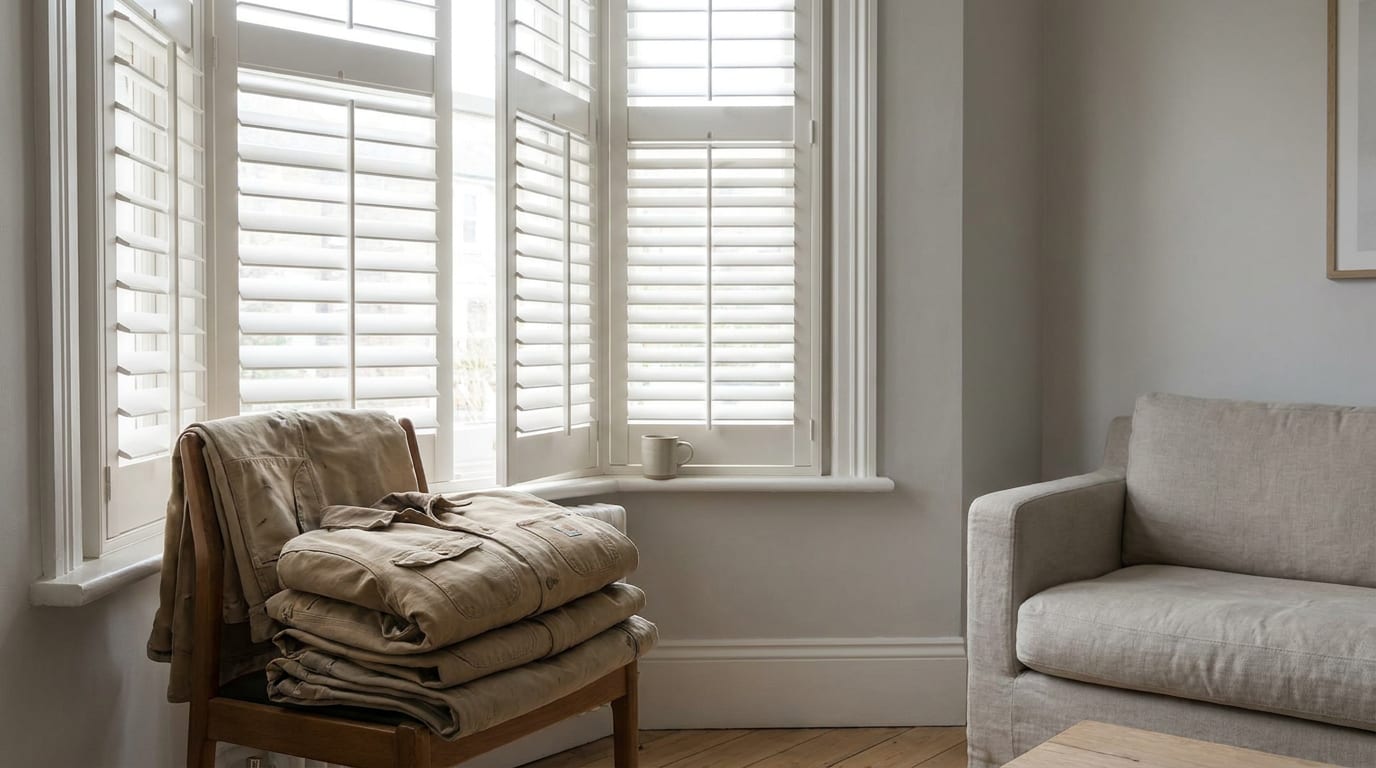
Inside mount is the cleaner look. The blind disappears into the opening, the casing stays visible, and nothing projects into the room. It is what most people picture and what most windows in a new house get. It needs two things from the window: enough depth in the frame to hold the headrail and let the blind operate without hitting the sash or the handle, and a frame square enough that a blind cut to fit does not bind on one side and gap on the other.
Its weakness is light. A blind inside the frame has to be a fraction narrower than the opening to move, and that clearance is a strip of light down each side every morning. On a bedroom window facing east it is the difference between dark and not dark. Cellular shades and roller shades show it most; faux wood blinds with wide slats show it least.
Outside mount
Outside mount covers the opening and some of the wall around it, so there is no side gap and the light is blocked far better. It also hides an out-of-square frame, an ugly or damaged casing, or a window that is not deep enough for an inside mount, which describes most windows with a shallow vinyl frame and many windows in older Nashville houses where the sash sits close to the interior face.
The cost is that the blind is visible as an object on the wall, the trim is covered, and the blind projects into the room by its own depth. Done well, oversized a few inches each side and mounted so the bottom rail clears the sill, it reads as deliberate. Done as an afterthought, it looks like a blind that did not fit.
- Inside: cleaner look, trim visible, light gap at the sides, needs frame depth
- Outside: better light control, hides bad frames, projects into the room
- Either: measure the actual window, not the one next to it
The depth test
Every product has a minimum inside-mount depth, the distance from the interior face of the frame to the nearest obstruction, usually the sash or a crank handle. Below that depth the blind can be mounted inside but will protrude past the frame. Below a smaller minimum it cannot be mounted inside at all. Measure the depth at the top of the frame where the headrail goes, and check for handles, latches and alarm sensors in the way.
Roller shades and cellular shades need the least depth. Faux wood and wood blinds with a heavy headrail need more. Plantation shutters need the most, and on a shallow frame they are built out with a frame of their own, which is a variant of outside mount.
Deciding, window by window
Start with the purpose. A bedroom that has to be dark points to outside mount, or an inside mount with side channels or a layered curtain to catch the gap. A living room where the trim is part of the look points to inside. A window that is out of square, shallow, or has a handle in the way is an outside mount whatever the preference.
Then measure. Inside mounts are ordered to the exact opening, in three places for width and three for height, using the smallest; outside mounts are ordered to the size you want covered. A house often ends up with both, inside where it works and outside where it must, and consistency across one wall matters more than consistency across the house.