
· by Michael Blair, Nashville's Shutters and Blinds
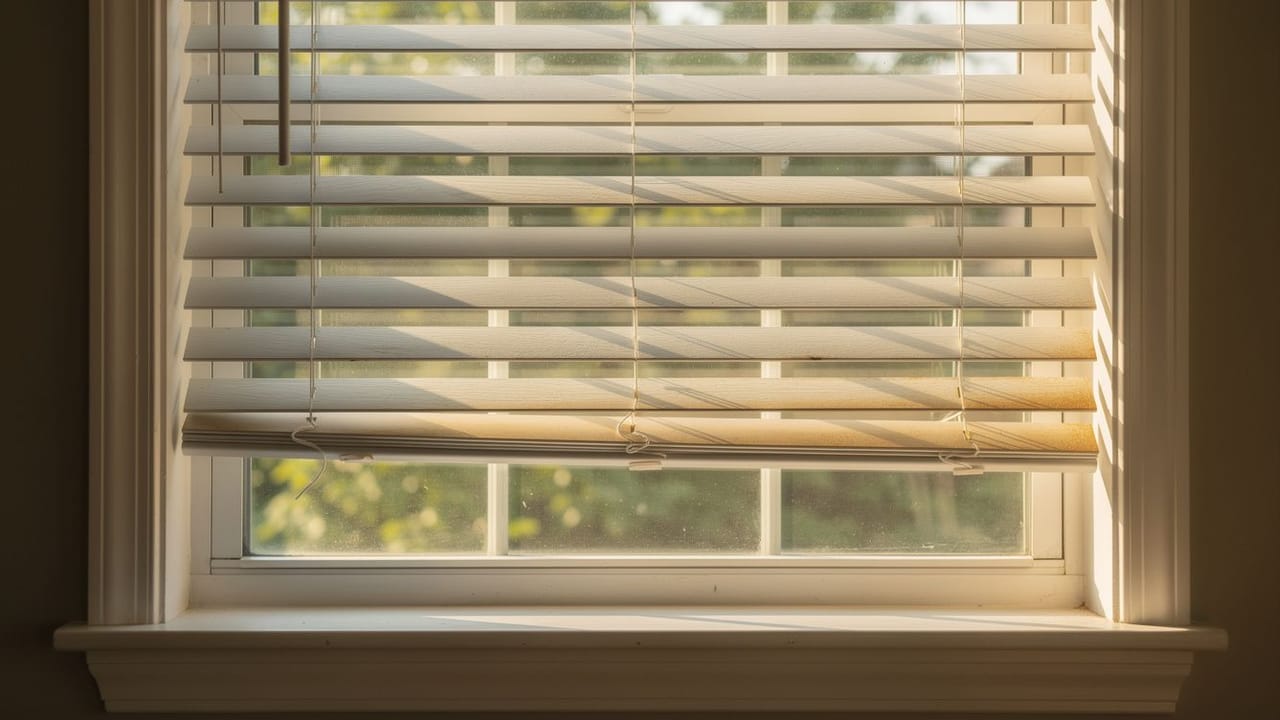
The complaint usually comes from the same windows: the west wall of a living room, a south-facing kitchen, the glass beside a door that takes the full afternoon. The blind there has gone from white to cream, or its slats have started to dip in the middle and no longer close flat. The blinds on the north side of the same house look new. That difference is the clue. This post explains what sun and heat do to the materials most blinds are made of, what a manufacturer’s warranty is likely to say about it, and how we decide on the blinds we fit whether to repair what is there, replace a few slats, or start over with something better suited to that window.
Why do blinds turn yellow in a sunny window?
Vinyl and most faux wood blinds yellow because ultraviolet light breaks down the plastic the slats are made from, and the color change is in the material rather than on its surface. Faux wood slats are generally PVC or a PVC composite, and the white or painted finish sits over or within that plastic. Years of direct sun slowly change it, and the face toward the glass goes first. That is why the slats are often a different color on each side, and why the blind on a shaded window in the same room still looks white.
Not every yellow blind is sun damage. Kitchen blinds collect a film of cooking grease and dust that reads as yellow from across the room, and that film does come off. The test is simple: clean one slat and compare it with the one above. If the cleaned slat is white again, it was dirt. If it is still cream, the plastic itself has changed, and no cleaner will reverse it.
Cleaning is worth doing carefully either way, because the wrong product makes it worse. Hunter Douglas Canada’s care page for its EverWood faux wood blinds recommends dusting with a feather duster or microfiber cloth, vacuuming lightly with a hand-held vacuum and a brush attachment, and wiping with a dryer sheet to cut static, and it warns that abrasive cleaners and chemical solvents will scratch or damage the surface. A scrubbed slat may come out whiter at first and then dull, which is harder to live with than an even cream.
What makes slats bend, sag or warp?
Heat softens plastic slats, and a long slat that is soft in the middle sags between the ladder cords that hold it. A wide faux wood blind on a window that faces the afternoon sun goes through that cycle every summer day, warming behind the glass and cooling at night, and over time the slats take on a curve. Once a PVC slat has set in a curve it rarely goes back flat. Middle Tennessee adds humidity to the heat for months at a time, so the same window can be hot, then damp, then air-conditioned within a day.
Other materials fail in other ways. Aluminum mini blind slats do not soften in the sun, but they are thin and kink when a child, a pet or a window crank pushes through them. Real wood does not yellow the way vinyl does, though its stain or paint can fade, and it moves with moisture, which is why we keep it out of bathrooms. Wood that cups or twists in a damp room is a humidity problem rather than a sun one, and the fix is a different material, not a different blind of the same wood.
The windows that cause this are predictable. West and south glass with no overhang, large panes in newer houses, and doors with full glass all heat the slats hardest. If a blind has failed there once, the same material in the same spot is likely to fail again. Our post on window treatments that cut Nashville heat covers what keeps those rooms cooler; this one is about what the heat does to the blind itself.
Will a warranty replace a yellowed or warped blind?
Often it will not, because sun damage is a common exclusion. Warranties differ by maker and by product line, so the only terms that apply to your blind are the ones its own manufacturer published. One example shows the pattern. Graber’s limited lifetime warranty covers defects in how the product was made, or what it was made from, for as long as the person who bought it owns it, except where a shorter term is named, and it names three years for its 2 inch horizontal vinyl blind slats.
The same Graber page lists what it does not cover. It names discoloration, fading, cracking, shrinking or stretching caused by long exposure to direct sunlight. It names slight warpage of wood blinds or shutters, and excessive warpage caused by high humidity. It also excludes normal wear and tear and damage from not following the measuring, installation or cleaning instructions. Graber also reserves the right to put off acting on a warping claim for up to twelve months so the product can acclimate to the humidity and temperature in the house.
That last point matters in a house here, where a blind may spend a summer swinging between humid air and air conditioning. A slat that looks warped in August may settle by winter, and that is the reason Graber gives for waiting. Before calling anyone about a claim, find the brand on the headrail label or the original paperwork, read that maker’s current warranty, and note how long you have owned the blind. If the blind came with the house, check whether its warranty covers only the original purchaser, as Graber’s does.
Repair, replacement slats or a new blind
One or two damaged slats on an otherwise sound blind are worth replacing. Most horizontal blinds let a slat be taken out by releasing the lift cord at the bottom rail and sliding the slat free of the ladder, and a matching slat goes back the same way. The catch is the match. Slats are sold by width, thickness and color, and a new white slat beside ten-year-old ones in a sunny window will show as a bright stripe. Replacing slats is a good repair for a kinked aluminum blind or one knocked by a door. It is a poor one for a blind that has yellowed evenly.
A bent aluminum slat can sometimes be eased back by hand, working the crease out slowly from the ends toward the kink, but a sharp crease usually stays visible, and a slat that has been folded often cracks the paint. A sagging vinyl or faux wood slat is a different case: the heat that bent it set the shape, so straightening it is rarely worth the attempt.
When the whole blind has yellowed or several slats have sagged, we replace it with new blinds measured to the recess, and we look hard at what goes back in that window. Aluminum, real wood in a dry room, or a shade from our shades page may handle a hot west window better than another set of faux wood slats. On the largest openings, plantation shutters are worth pricing, with the same caution about reading the maker’s terms, since Graber’s exclusion for warpage names shutters as well as wood blinds. Every house is different, so we look at the window, its exposure and what failed before we suggest anything. If you are in Franklin or anywhere else we work, send us the windows that are giving you trouble and we will come and measure.
Sources
- Graber (Springs Window Fashions), Limited Lifetime Warranty Coverage — Graber’s own terms: original defects covered while the original purchaser owns the product; three years for 2 inch horizontal vinyl slats; exclusions for long direct sun, wood blind and shutter warpage, humidity, wear and tear; up to twelve months’ deferral on warping claims
- Hunter Douglas Canada, How to Clean EverWood Faux Wood Blinds — Cleaning faux wood blinds: dusting, vacuuming with a brush attachment, dryer sheets for static; no abrasive cleaners or chemical solvents
FAQ
Yellowed or Warped Blinds: Repair, Slats or Replace — questions
How do you fix bent aluminum mini blinds?
Work a mild bend out slowly by hand from the ends of the slat toward the kink. A sharp crease usually stays visible and may crack the paint, so for one or two badly bent slats the better repair is to release the lift cord, slide the damaged slats out of the ladder and fit matching new ones.
Can you replace just one blind slat?
Usually, yes. On most horizontal blinds the slat slides out of the ladder once the lift cord is released at the bottom rail, and a matching slat goes back in. The difficulty is color: a new slat beside older sun-faded ones often stands out, so single-slat repairs suit damage from knocks better than yellowing.
How do you clean blinds that have turned yellow?
Clean one slat first and compare it with its neighbor. If it comes back white, the yellow was grease and dust. If it stays cream, sunlight has changed the plastic and cleaning will not reverse it. Dust or vacuum with a brush and avoid abrasive cleaners and solvents, which scratch faux wood surfaces.
Does sunlight yellow faux wood blinds?
Yes. Most faux wood slats are PVC or a PVC composite, and years of direct ultraviolet light change the plastic so the color shifts toward cream, starting on the side facing the glass. The change is in the material rather than on the surface, so it cannot be cleaned off, and slats in shaded windows stay white.
Is warping of wood or faux wood blinds covered by warranty?
It depends on the maker, so read your own blind’s warranty. Graber’s, for example, excludes slight warpage of wood blinds or shutters, warpage from high humidity, and damage from long direct sun, and it may wait up to twelve months on a warping claim so the product can acclimate to the house.